Monday, February 10, 2014

Sony 2014 4K UHDTV Prices Leaked

Sony introduced its 2014 line of 4K televisions at the CES. It consists of 3 series (up from 2 last year) with 9 models. Screen sizes are available from 49-inches all the way up to 85. There are a number of improvements over the 2013s. They include HEVC decoding (for upcoming Netflix 4K streaming) and HDCP 2.2 as well as HDMI 2.0, according to Sony spokesperson.
Sony XBR70X850B  
The big new picture quality features include the return to LED backlights with true local dimming on the XBR 950 series, and the extended dynamic range capabilities of the 900 and 950 series (the latter being up to 3 times the brightness range).

More information and all the prices after the break.

Sony has created a wedge shape to increase the internal volume of its 900 series 4K TVs for better bass and audio dynamic range.

In pricing, we found the 79-inch for under $9000 intriguing. This is the first 4K TV with this screen size and it represents a huge price drop when compared to the 85-inch class X950 ($25K). Could 78+ inch UHDTVs lead to a new TV segment we are calling "Luxury Televisions"? The 4K experience on this size screen really brings out the detail. It is something to experience first-hand.

The 2014 Sony 4K TV will start shipping to dealers by June.

XBR-49X850B 49-inch $2199.99

XBR-55X850B 55-inch $2999.99

XBR-65X850B 65-inch $4499.99

XBR-70X850B 70-inch $5999.99

4K Ultra HD, HD content upscaled to 4K, Triluminous for wider color gamut, Latest HDMI support for next gen 4K players & services, and stream HD entertainment wirelessly with built-in Wi-Fi, 3D
Sony XBR-55X900B
XBR-55X900B 55-inch $3999.99

XBR-65X900B 65-inch $5499.99

XBR-79X900B 79-inch $8999.99

Wedge TV design with front-facing speakers, X-tended Dynamic Range for up to 2x brightness range, Triluminous for wider color gamut, 3D, latest HDMI support for next gen 4K players and services, and stream HD entertainment wirelessly with built-in Wi-Fi
Sony XBR-65X950B
XBR-65X950B 65-inch $7999.99

XBR-95X950B 85-inch $24,999.99

Extended Dynamic Range PRO with up to 3x brightness range, Triluminous for wider color gamut, 3D, latest HDMI support for next gen 4K players and services, and stream HD entertainment wirelessly with built-in Wi-Fi.

Source: HD Guru
  

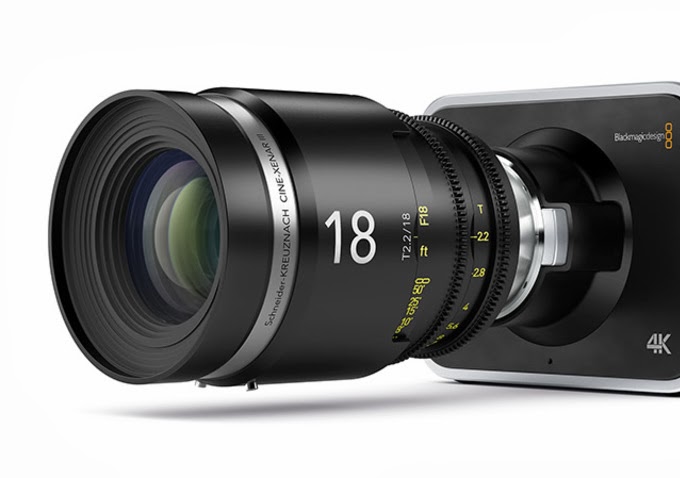
Blackmagic Production Camera 4K is Now The Cheapest 4K Pro Camera on the Market

Blackmagic Design today announced the Blackmagic Production Camera 4K is now shipping and with a new low price of $2,995.
Blackmagic Production Camera 4K 
Think you can't afford a 4K digital production camera? Think again. The highly anticipated Production Camera 4K is now shipping -- and here's the good news. Blackmagic has dropped the initial $4,000 price more than $1,000 to make the camera more accessible to filmmakers at $2,995, Blackmagic Design announced today. The new pricing makes the camera the cheapest 4K pro camera on the market -- at least for the moment.

The new price -- the lowest of any 4K digital production camera -- will be available for all customers, including pre-orders. It will be available at Blackmagic Design resellers worldwide. Blackmagic Production Camera 4K is a super high resolution 4K digital production camera for Ultra HD television production. It features a large Super 35 sensor, professional global shutter and EF and ZE compatible lens mount.

"The support from the creative community for the Blackmagic Cinema Camera and Production Camera 4K has been amazing," said Grant Petty, CEO, Blackmagic Design in a statement. "As with all of our products, we work hard in production to reduce costs so we can pass along the savings, even to our first Blackmagic Production Camera 4K customers. The Blackmagic Production Camera 4K is a perfect companion for ATEM Production 4K switchers and we hope the new low price will help more customers to expand their Ultra HD live production set ups with even more camera angles!"

Here are the key features according to Blackmagic:

Key Features
  • Ultra HD 3840 x 2160 resolution
  • ProRes 422 (HQ)? recording
  • Super 35 sensor
  • Global shutter
  • EF and ZE compatible lens mount
  • Built-in SSD recorder
  • 5" LCD touchscreen
  • Metadata entry
  • 6G-SDI output for 10-bit HD and Ultra HD
Source: Indiewire
  

The Story Behind the Buzz About 4K TV

Content providers including Netflix, YouTube, and Amazon are ready to take the plunge, offering programming for the new ultra-high definition 4K TVs from the likes of Sony and Samsung -- for now, at price points that will appeal only to the early adopter crowd.

On the scene at this year's Consumer Electronics Show in Las Vegas, Foolish tech and entertainment analyst Tim Beyers got an up-close look at some of the newest sets and was on hand at Samsung's press conference where director Michael Bay, in the midst of what was to be an endorsement of the new Samsung 4K TV, walked off stage. He joins Rex Moore to dissect the buzz around 4K television.

A full transcript follows the video.

How to be a rich couch potato

Of course you love TV and you know cable's going away. Disruptive programming models virtually assure its demise. But do you know how to profit from the upheaval? There's $2.2 trillion out there to be had. Currently, cable grabs a big piece of it. That won't last. And when cable falters, three companies are poised to benefit. Click here for their names. Hint: They're not Netflix, Google, and Apple. 

The Story Behind the 4K Buzz (Rex Moore / CES 2014)
 
http://www.youtube.com/watch?v=ozhf5c5Pjec#action=share

Rex Moore: Sticking with TV, the big buzzword last year was 4K television -- probably even before that -- but where are we now with ultra-high definition, or 4K, television?

Tim Beyers: We have a lot more of it coming, and I think we can thank Netflix, YouTube, and Amazon for some of this, because Netflix in particular is going to have season two of House of Cards completely broadcast in 4K, and that's a new thing.

You need to have the content to make the 4K TV worthwhile and we know, here at CES, we had Samsung and Sony introduce new 4K TVs. In the unfortunate case with Samsung, they were going to have director Michael Bay, of Transformers fame -- frankly, we all thought it was a joke! -- but he came out onstage and he was going to do a big endorsement for the new 105" UltraHD Samsung curved display... and he flubbed the lines.

Moore: Yes, he did.

Beyers: He just walked right offstage. To their credit, Samsung said, "Well, it's Vegas, it's a live show..."

Moore: I'll tell you what, they probably got 10 times more publicity out of that than if that had not happened.

Beyers: Yes, and that's what some people are saying. Although the downside of that is that you don't know what else Samsung introduced; it overshadowed everything.

But, yes, you're right. Now, 4K is in the headlines -- partially because of this flub -- but also because there is so much content now that's starting to come and be ready for 4K. It's not just Netflix; we're talking about YouTube, Amazon is going to shoot all of its originals in 4K, so we'll see.

If enough content is there, consumers... I'm not ready to spend $3,000 on a 4K TV.

Moore: Neither am I. That is still one thing -- I think we're not there yet.

Beyers: Right.

Moore: Early adopters may be hopping in, but it's not ready for the masses yet.

Beyers: No, I don't think so. When you're looking at $3,000-$4,000 price points, it is truly for the early adopters. But there are some big names getting behind it, so it's an area to watch.

How to be a rich couch potato

Of course you love TV and you know cable's going away. Disruptive programming models virtually assure its demise. But do you know how to profit from the upheaval? There's $2.2 trillion out there to be had. Currently, cable grabs a big piece of it. That won't last. And when cable falters, three companies are poised to benefit. Click here for their names. Hint: They're not Netflix, Google, and Apple. 

The article originally appeared on Fool.com.

Netflix: We're already thinking beyond 4K

Netflix: We're already thinking beyond 4K - We sit down to find out how big 4K can really be, and find out how we'll be watching the gogglebox in ten years' time.

Netflix
Best start extending the living room

After years of false starts, there's a real buzz around the future of TV again – and for once it's got nothing to do with 3D.

4K is set to be the next big thing on our goggleboxes, asking us to shell out thousands once more to get the brightest and fanciest pictures ever beamed into our eyes.

But before you start sighing and working out how many months you'll have to save to afford that 60-inch TV to replace the one you only bought last year, we've got some bad news: fresh from announcing its big plans to deliver 4K over the 'net, Netflix is already envisaging the next generation of how we're going to watch TV.

While ultra HD is the thing that's got us all talking, apparently there's a massive change coming that's going to seismically shift the way content is shown and produced; suffice to say, you best get saving for that new 110-inch telly in 2018 as well…

Larger than life

"The next 2-3 years are going to be a fun ride," says Netflix's Neil Hunt, as we meet in a hotel room festooned with images of the streaming service's popular shows and more TVs than seem appropriate.

There's also an embroidered Netflix Quillow (quilt in a pillow) that we're starting to fall in love with, but lose interest as Netflix's chief product officer warms to his theme.

"The question I have is: how do we get from where we are today, which is fundamentally [viewing] the same picture you've been watching on the big screen for years, and turn that into the next level of evolution?"

It's a tricky question – TV is such a commoditised element of daily life that how do you find new ways to change something most would rather was left alone?

Netflix 4K life

Hunt thinks he has the answer – and it's a necessary one given he thinks 4K isn't going to be enough for some people. "I personally have an expectation that by 2016 we'll have run out of resolution innovation. And the next thing will be 'wide field of view'. You heard it here first.

"Currently the guideline for a TV is that you view it from a distance equivalent to 1.5 times the screen size. What that means is when the director of photography shoots a scene he knows which wide angle lens to put on to make the perspective look elongated from normal.

"But it's entirely based on the physics of how you are from the screen, so if you sit further away from it, everything looks flat. If you sit too close, everything looks wide angle and too far apart."

So what is the answer to solving the distance problem? Hunt thinks it will take a radical re-imagining that will cause nightmares for set designers, producers and directors.

"The next innovation is for a screen that doesn't just fill 30 degrees of your vision but goes to 120 degrees field of view.

"That means a 100 inch widescreen that you view from the same couch distance as today. The interesting angle will be in the centre, but there will be added ambiance for the other two thirds around the edge."

"It's going to be great for nature photography – you'll be able to see the little details and something will tweet over there and you'll be able to actually look and see it."

It seems unlikely that this will even begin in 2016, as it will require a number of huge changes to an industry that's still trying to come to terms with the enhanced clarity 4K will bring. Hunt admits that it will initially require a set of standards to be adhered to, as well as working out how to show 'field of view' content on a regular screen, as just squashing it down will create a crazily distorted image.

And that's before the directors, actors and set makers get their head around the conundrum of working out how to 'channel' viewers' attention to separate parts of the screen – but as Hunt points out "it's something that the Imax guys have mastered, and we'll have to get that into home use."

With the likes of Sony and LG showing off short throw projectors at CES 2014, the ability to have a massive TV in your current lounge suddenly seems much closer to reality.

When is UHD not really UHD?

While most of the TV manufacturers are desperate to convince the watching public that 4K, or Ultra HD, is the next big thing, in truth it's still very much in its infancy – with content pretty hard to come by.

Hunt admits 4K isn't a deal breaker right now, calling it a 'passion project', but believes it's something that Netflix needs to be shown as leading in to dispel the notion that the online service is a low quality streaming platform.

"We're doing [4K streaming] partly for its brand value, to establish ourselves as leader in the space. The key piece for me [with 4K] is the goal here is to be at the forefront of delivering the best possible quality.

Netflix redesign

"You've to imagine that the number of 4K sets compared to the amount of content we have is not going to deliver much practical value, but it's going to help to cement the Netflix brand, as something that's not scratchy 320p webisodes.

"The nice thing about streaming video is that you can build 4K relatively inexpensively and deliver it to the 0.1% of customers that have the necessary TV.

"If you're trying to do that as a traditional broadcaster, the amount of infrastructure, the servers needed to support the one user from each district that has bought the expensive equipment – even the upgrades to the set top boxes - requires a significant redesign that can't be repurposed. It makes it very expensive."

The next level of content is going to be a hard sell to consumers who are only just converting their media libraries to Blu ray, so Hunt believes online streaming is the answer – it can also solve the 'chicken and egg problem' he describes, whereby cable and satellite broadcasters will be wary of upgrading to this new format without content, and nobody will make it with no easy delivery mechanism.

But Hunt believes that the very title of UHD is a misnomer for 4K resolution, as it will be far more technologically advanced than just more pixels:

"UHD is really three completely different pieces and 4K is just one of those. It's the pixel count on the screen, but it's like digital cameras, which have increased megapixels beyond the point of useful return.

Beyond 4K there's a point of diminishing returns; we've already taken two bites of the apple, with 720 and 1080, this is just another incremental improvement.

"But the other two pieces are the frame rate, which is about a smooth range of motion, and the high dynamic range (HDR) of colour, which is about the depth of each pixel.

"The question is: can we make each pixel stand for a bigger range of brightness and colours, something that makes the picture look amazing?

"Neither frame rate nor HDR are without controversy, but I'm convinced they are the future, the next generation high quality; so for me at least, UHD is high frame rate, 4K and HDR in the colour, we won't see all of that in 2014. Realistically it's probably 4K in 2014, then the other two in 2015 and 2016."

Pressed on these ideas, Hunt admitted that it would be a hard sell to consumers to just describe the changes the likes of improved frame rate and HDR would bring, but believes it's wholly necessary for the industry to embrace them in order to give UHD TVs the jaw-dropping picture that will make buyers clamour to own one – and producers have to be prepared to shoot scenes now that take advantage.

"You won't want to use HDR to just make things brighter," Hunt explained. "It's got to be that 0.1% of the pixels on screen are brighter if the sun is reflecting on the water. The rest of the picture is unchanged, but the viewer thinks 'Wow, that reflection makes it so much more realistic, it's like you're there, it's almost unreal. But that's the thing, it won't seem unreal at all, it's VERY real. It's hyper-real. I think that will be very compelling; we just need to learn how to use it."

When it comes to the future of TV technology, most viewers' excitement will be predicated on a couple of items: does the idea of a massive step forward in immersive viewing fill you with joy, or does it feel like a step too far?

And the more important factor: to achieve these high quality effects, new TV technology will need to be developed, meaning even those that buy a decent 4K set now probably won't get the benefits Hunt is extolling.

But beyond that, fittingly 2020 could be the year that our vision in front of the TV becomes clearer than ever before, with a level of realism that none of us could have foreseen.

As Hunt states, there are a lot of issues over standards and hardware to overcome before this can be a reality – but if the end result is something that is a bigger leap forward than the move from black and white to colour filming, then TV could be set for another renaissance at a time when many are consigning ourselves to a lifetime of watching content on mobiles and tablets.

Related Posts:
 
Source: Techradar
 

Panasonic Unveils 4K Video Recording Camera - DMC-GH4

Panasonic has launched its new single lens mirrorless camera that is capable of capturing 4K videos.

The DMC-GH4 is an ultimate photo/video hybrid digital single lens mirrorless (DSLM) camera, which features improved image quality for both photo and video.

Panasonic DMC-GH4 4K Camera

The professional photographers and videographers can also use Panasonic’s new SDXC and SDHC UHS-I cards, the Gold Series "SDUC", which complying with UHS Speed Class 3 (U3) and suitable for 4K video recording at a guaranteed constant minimum write speed of 30MB/s.

Hitesh Ojha, deputy general manager, Audio Video Products Department, said: "4K is clearly the standard, and in the new GH4 along with the 4K SD cards, professional photographers and videographers will have a complete solution from Panasonic. This world's first 4K video recording in such a small form factor will be a game changer for the industry."

The camera also features the newly developed 16.05-megapixel Digital Live MOS Sensor for DMC-GH4 excels both in sensitivity and response and suppresses rolling shutter effect even when using electronic shutter or recording motion image. The image processor Venus Engine is also newly developed dramatically boosting its performance with new quad-core CPU that lets high speed signal processing required for rich video recording such as 4K.

It features full HD video recording, formats such as MOV, MP4 and AVCHD to choose from, real-time image output for external monitor, high-precision Contrast AF system to enhance DFD (Depth from Defocus) technology which even shortens the time to set focus to achieve ultra-high speed.

The main structure is composed of magnesium alloy full die cast front/rear frame. It also features splash / dustproof construction due to the sealing of every joint, dial, and button.

It also incorporates wifi with NFC technology, terminals highly connectable to external equipment.

Source: TradeArabia